

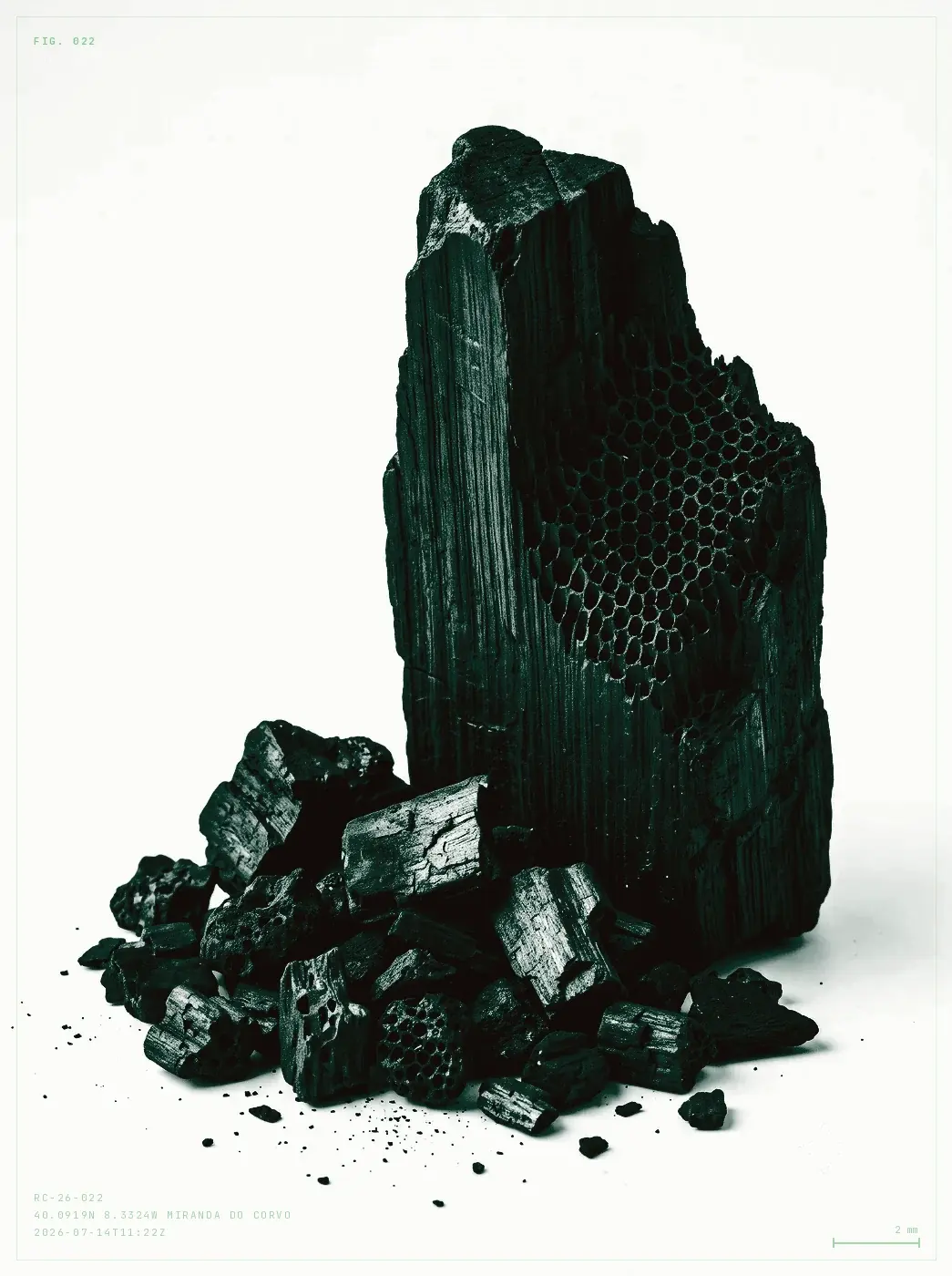
Biochar
What is biochar?
A stable, porous carbon made by heating biomass without oxygen — a material that locks carbon away for centuries and brings soil back to life.
The idea
Carbon, taken out of the fast cycle
Plants capture CO₂ as they grow — but when they rot or burn, nearly all of it returns to the air within years. Biochar interrupts that loop: convert the biomass to stable carbon first, and what took a season to capture stays captured for centuries.
2,000 years of evidence
Terra preta knew first
In the Amazon basin, patches of earth called terra preta are darker and more fertile than anything around them — enriched with charred biomass by farmers more than 2,000 years ago. The carbon is still there. Modern biochar is that discovery, engineered: the same chemistry, now measured and verified.
How it's made
Heat it where fire can't follow
Deprived of oxygen, biomass can't burn. Heated to 450–700 °C it pyrolyses instead: volatiles leave as energy-rich gas, and the carbon left behind rearranges into fused aromatic rings — stable, porous, black. Biochar.
01
Biomass
Fire-risk forestry & agricultural residue
02
Pyrolysis
450–700 °C · no oxygen · energy released
03
Biochar
Stable carbon + heat as co-product
The journey of a tonne
From a hillside to a soil horizon
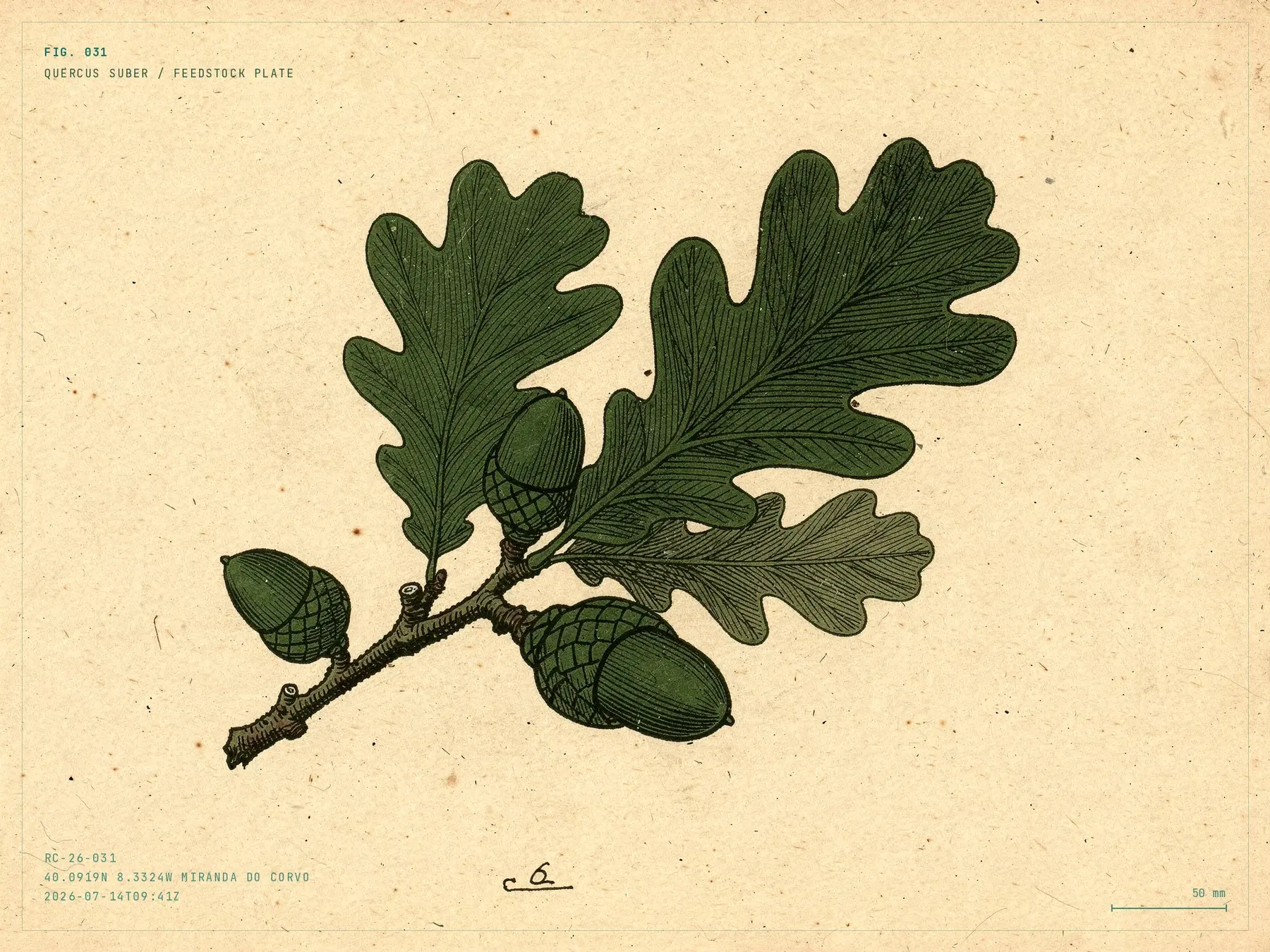
FIG. 031 · QUERCUS SUBER
01Capture
A residue that would otherwise burn on the hillside — olive prunings, forest thinnings, cork oak. Photosynthesis already pulled the carbon out of the air; the only question left is whether it goes back.
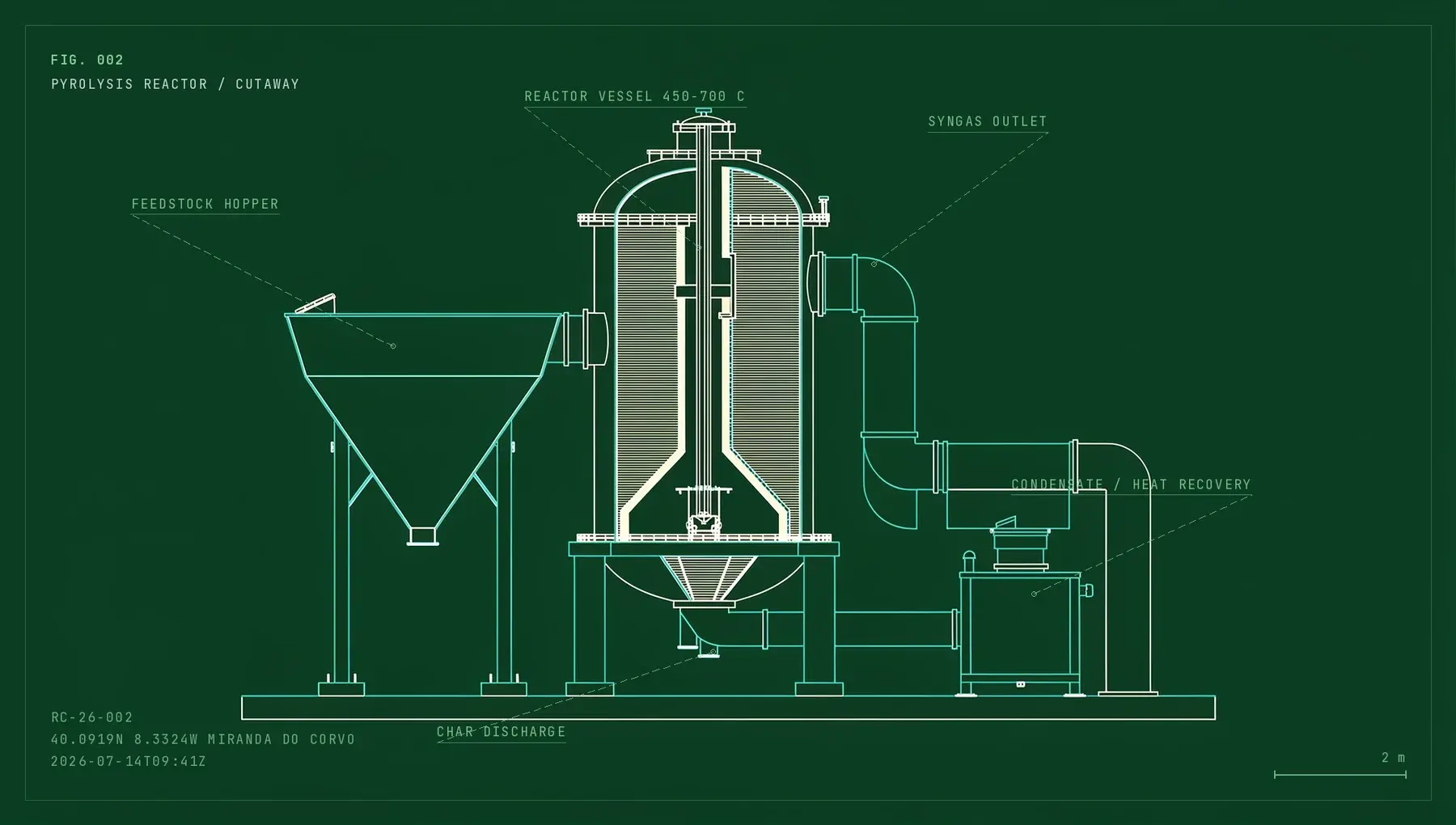
FIG. 002 · PYROLYSIS REACTOR
02Transform
Heated to 450–700 °C without oxygen, the material does not burn. Its labile carbon rearranges into fused aromatic sheets — the structure that will refuse to decompose.
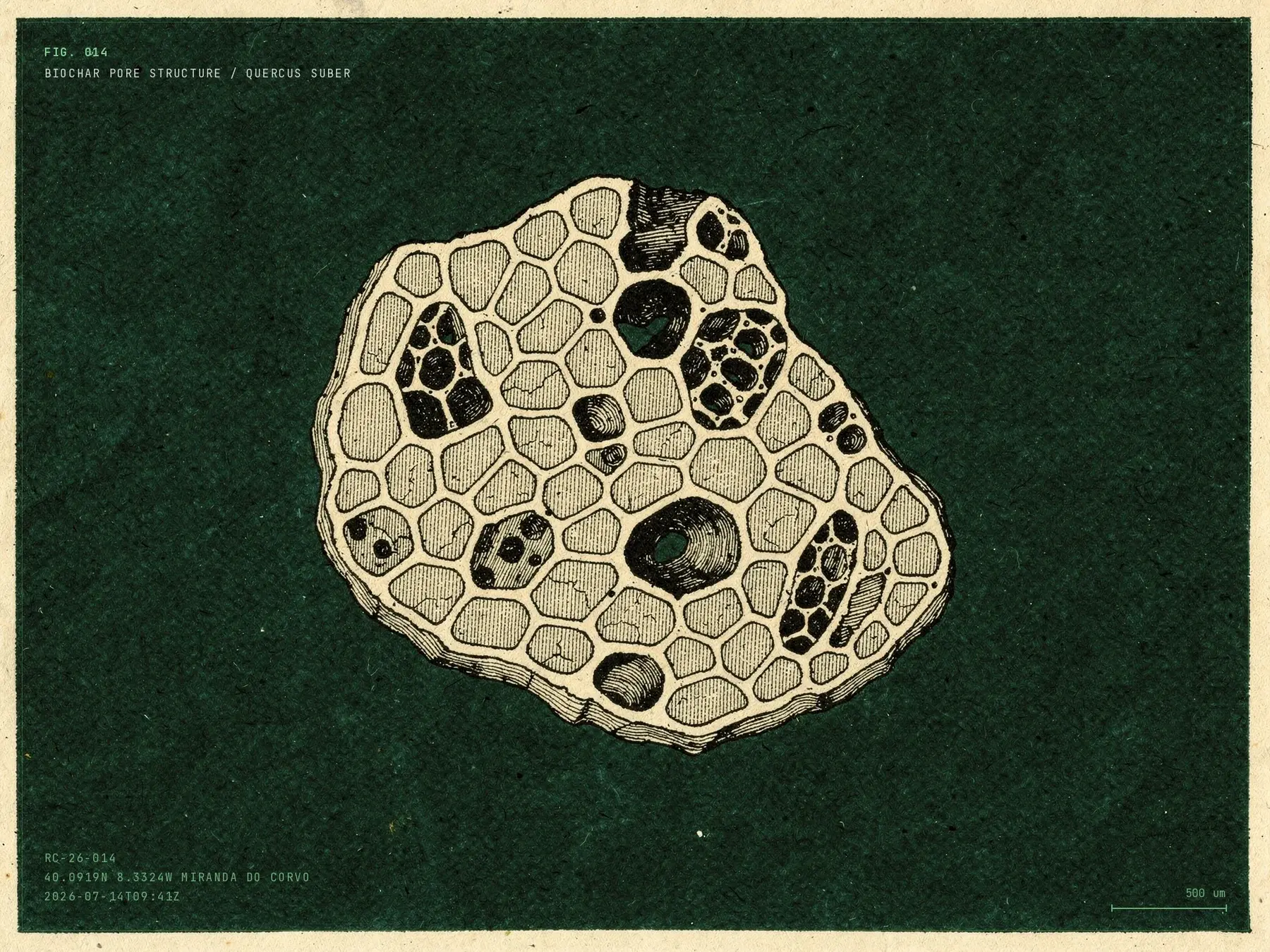
FIG. 014 · PORE STRUCTURE
03Lock
What emerges is porous, glassy and stubborn. Permanence is measured from this structure itself — the H/C ratio, read by accredited laboratories — not inferred from the settings of the machine that made it.
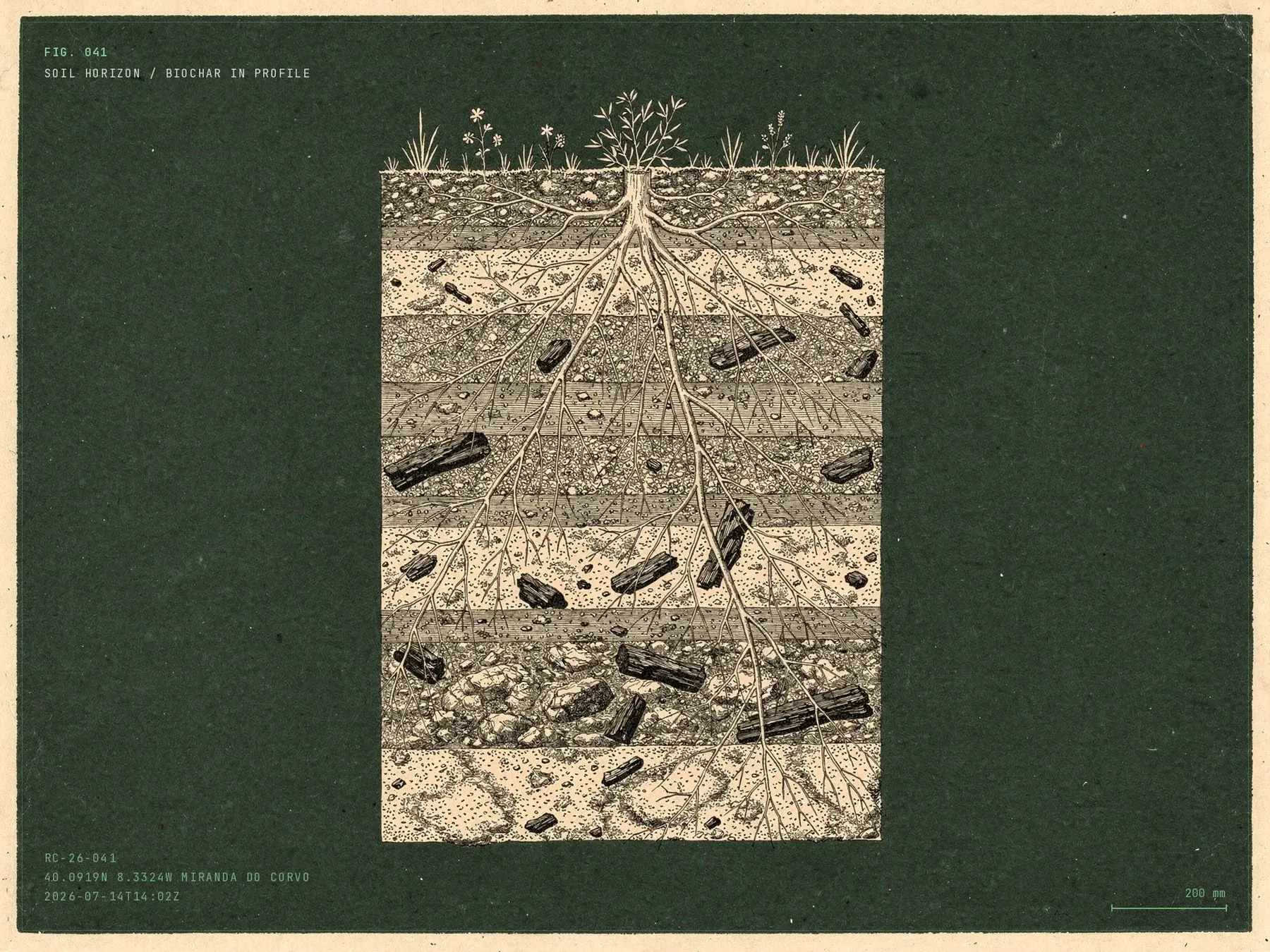
FIG. 041 · SOIL HORIZON
04Return
Into the soil, where it holds water and nutrients — and holds its carbon for centuries. The terra preta soils of the Amazon still carry theirs after two thousand years.
What it does
Good for the sky, better for the ground
For the climate
Removal, not avoidance
A tonne of biochar carries roughly 2.9 tonnes of CO₂ gross — and about 2.2–2.5 tonnes once permanence factors and lifecycle emissions are deducted. We claim the net figure, not the gross one.
Energy as a co-product
Pyrolysis releases energy-rich gases — process heat that can power the plant or a partner instead of fossil fuels.
Fire risk becomes feedstock
The residue that would fuel the next fire season becomes the input — removal that also protects the landscape.
For the soil
Water retention
The porous structure holds water where roots can reach it — measurable drought resilience in dry summers.
Nutrients stay put
Charged surfaces hold nutrients in the root zone instead of leaching into groundwater — more from every unit of fertiliser.
A home for soil life
Millions of pores make ideal habitat for beneficial microbes and fungi — the engine of healthy soil structure and pH.
Why it doesn't come back
Measured, not modeled
Pyrolysis fuses carbon into aromatic rings that microbes can't easily break apart. Chemists track this with the hydrogen-to-carbon ratio — below 0.7 counts as biochar, and the lower it goes, the longer the carbon lasts. It's also why one gram can hold hundreds of square metres of internal surface — a tennis court folded into your palm.
0
yrs of terra preta evidence
< 0.7
H/C ratio threshold
0
surface area per gram, up to
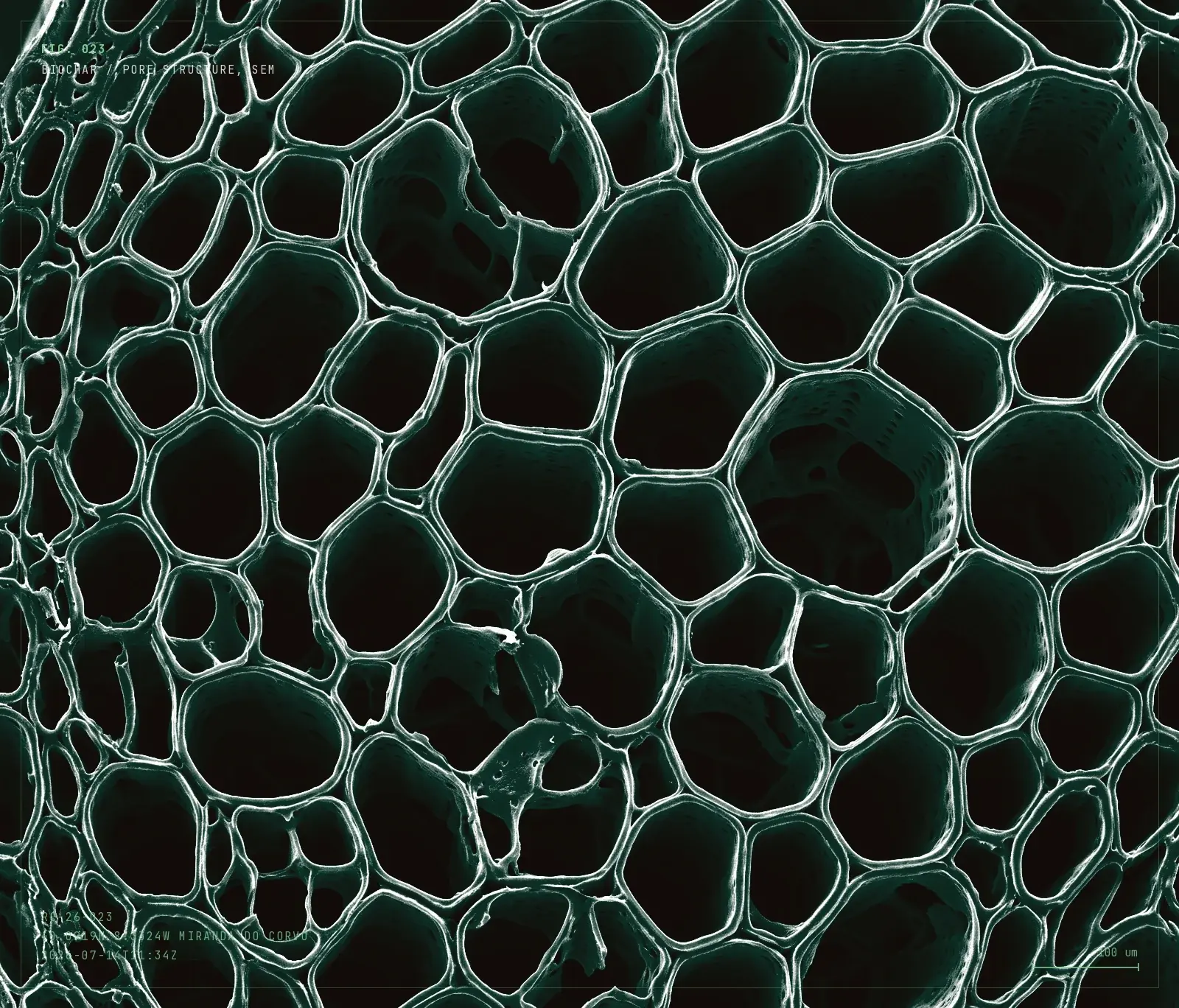 Pore-structure image
Beyond the field
Where biochar goes to work
Agriculture & soils
The classic use: soil amendment that improves fertility, water balance and yields — and the anchor of insetting programmes.
Construction & materials
Blended into concrete, asphalt and composites — carbon locked into the built environment while improving material properties.
Filtration & remediation
Its adsorbent surface treats water and air and helps recover contaminated soils — the activated-carbon family of uses.
Energy & engineered carbons R&D
Process heat as a co-product today; activated and engineered carbons as exploratory R&D — no partner or programme yet. Today, the removal is the product.
Common questions
Asked and answered
Now see it become a credit
Read next