

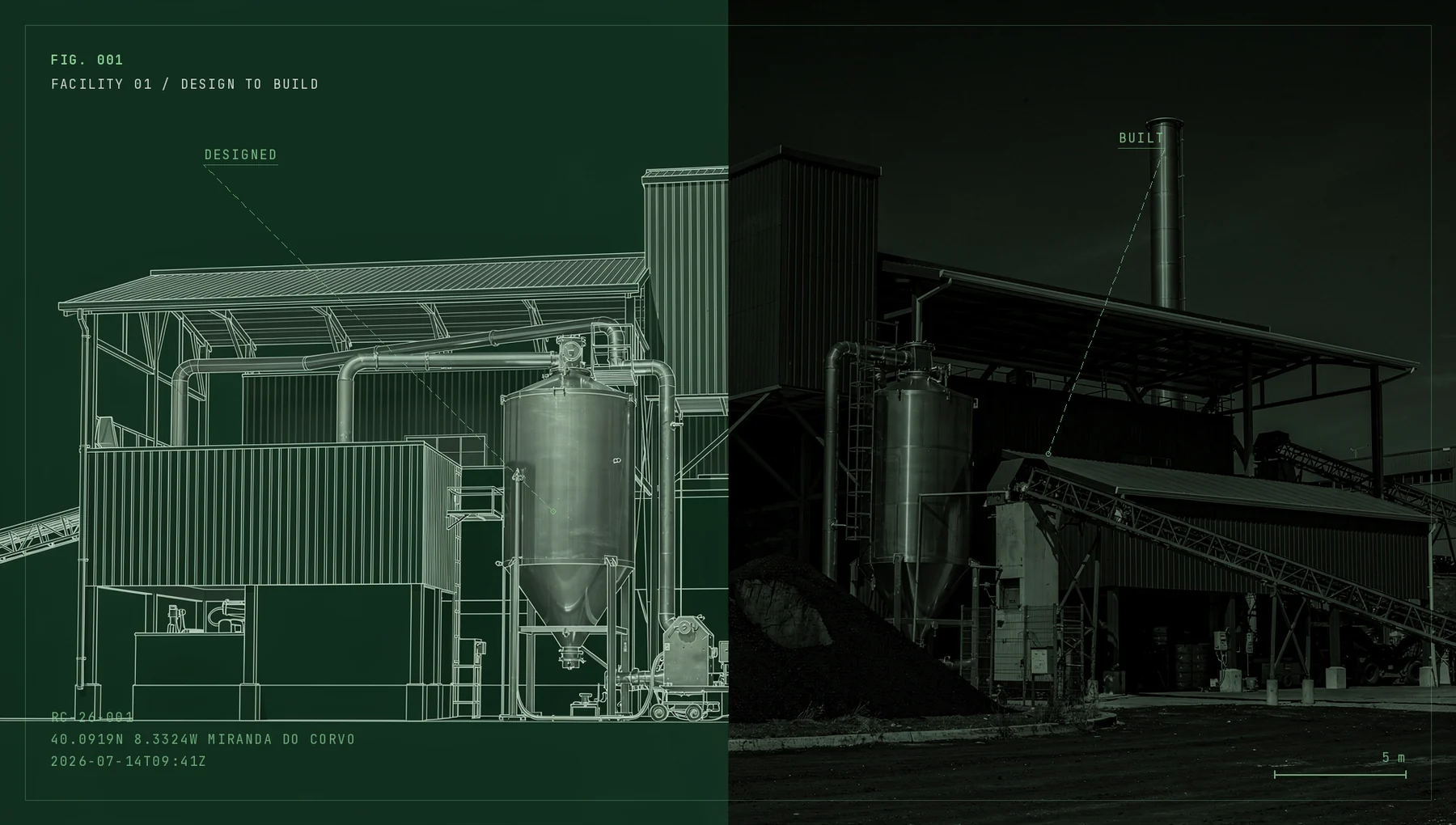
 Facility 1 · designed | built
Portugal · Flagship
Two industrial facilities
Two facilities in Portugal, each designed for 50,000 t/yr of feedstock — instrumented from day one, every batch analysed by an accredited laboratory.
Projects
We develop biochar carbon-removal projects two ways: our own facilities, whose credits we sell — and units inside a partner's value chain, whose removals they keep. Portugal first, then Mozambique and Angola.
Our own facilities. We produce the biochar, certify the removal and sell the credit — the tonnes are additional to any buyer's value chain.
Portugal
Facility 1 · 50,000 t/yr of feedstock
Portugal
Facility 2 · 50,000 t/yr of feedstock
Mozambique
6–8 units
Angola
6–8 units
Units sited inside a partner's operation, converting their own residue. The removal lands in their value chain — their scope 3, not an open-market credit.
Partner value chains
3–4 units
Development roadmap · PT → MZ → AO
Statuses reflect development stage — no operating production facilities yet. Feedstock throughput is biomass processed, not CO₂ removed. First production follows in 2027.
Selected work
Facility 1 · designed | builtPortugal · Flagship
Two facilities in Portugal, each designed for 50,000 t/yr of feedstock — instrumented from day one, every batch analysed by an accredited laboratory.
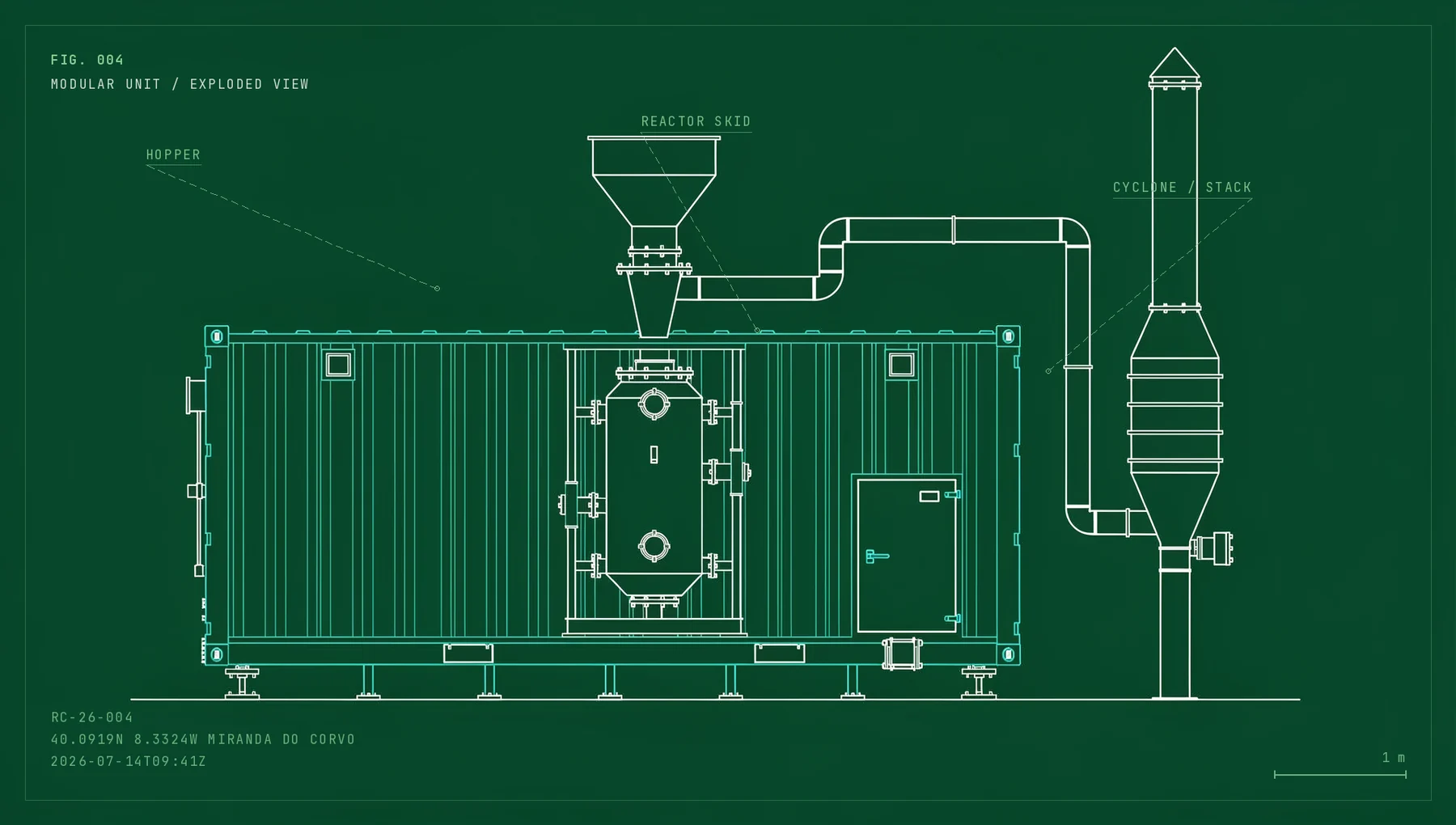 Modular unit · exploded view
Insetting
Three to four units sited at partner operations, converting their own residue. The removal lands in their footprint rather than on the open market — in discussion with partners now.
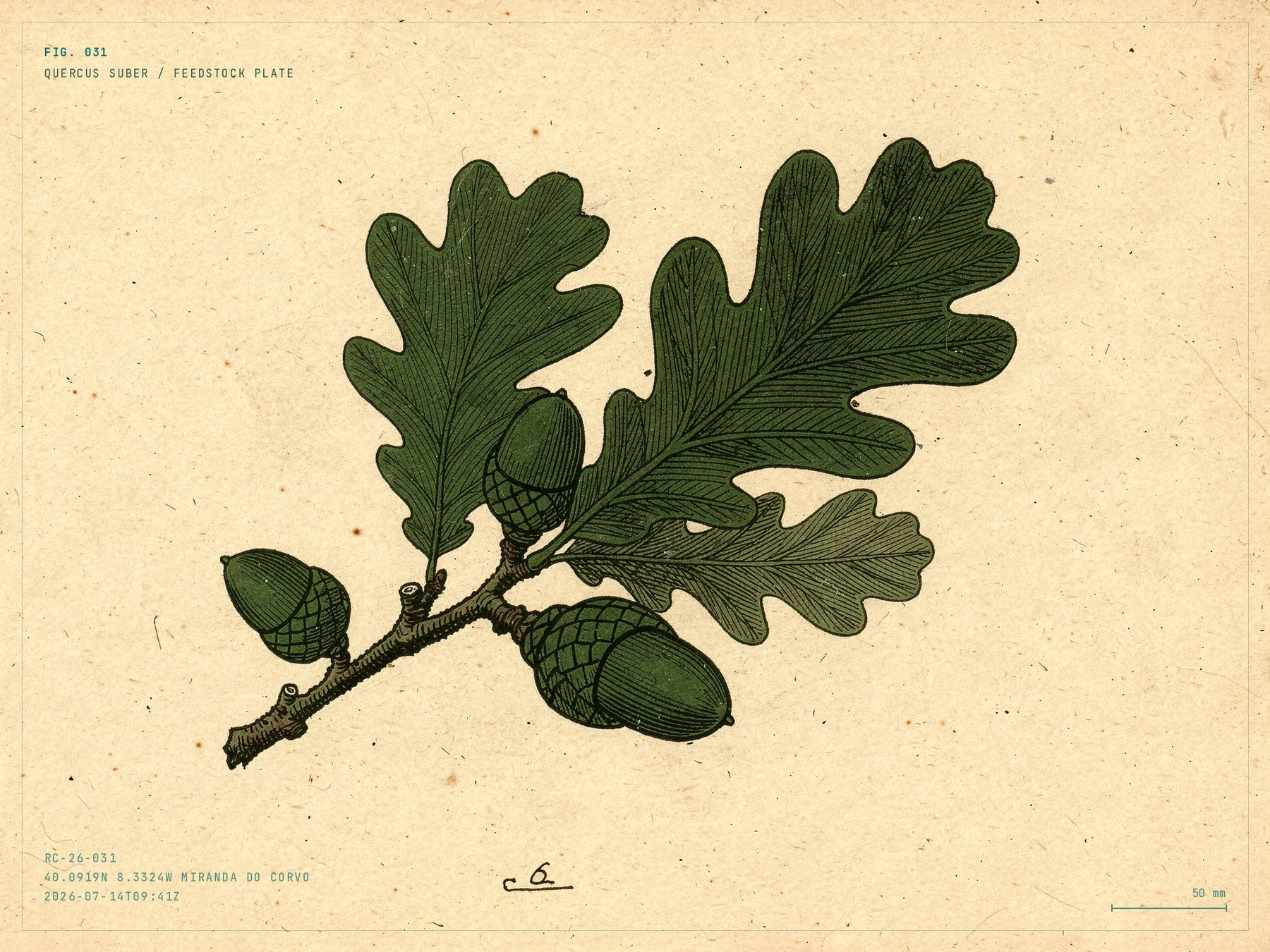 Feedstock · specimen plate
Feedstock
Supply agreements in negotiation with forest-management operators around the first site — removal that also prevents the next fire season.
Build journal
A pre-launch company asks you to believe a schedule. The least we can do is let you watch it — what moved, when, and what it unblocks. Updated as the build proceeds, including the months when little happens.
July 2026
Every gate, measurement and reconciliation rule behind a Recarbono tonne is now public — before a single tonne exists to be flattered by them. The standard can be audited today and held to as the first site comes online.
July 2026
A site and permitting protocol with the Câmara Municipal — the municipality around our first site. It covers siting and permitting cooperation; it is not a feedstock supply agreement, and we will not describe it as one.
June 2026
The Centro da Biomassa para a Energia joins the build — the national reference for biomass in Portugal, and the technical partner for feedstock characterisation.
Next
Commissioning — first material through the reactor, target late 2026.